University of Porto has the highest entry scores in Portugal
Aerospace Engineering tops national ranking for second consecutive year as U.Porto leads among the most competitive degrees
The University of Porto (U.Porto) has secured a leading position in the 2025/26 National Access Competition (CNAES), once again achieving the highest entry scores and leading the list of Portugal’s most competitive degree programmes.
According to data released by the Ministry of Education, Science and Innovation, 4,929 students were placed across U.Porto’s 59 undergraduate and integrated master’s programmes, out of 5,041 available places. The institution leads nationally in terms of highest average entry score and number of programmes chosen as first option by top-ranked applicants.
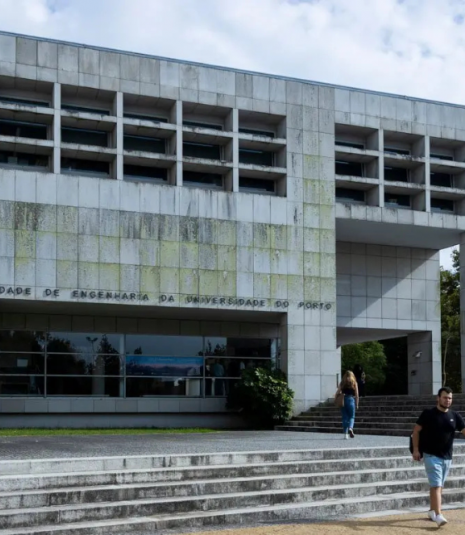
A standout performer is the BSc in Aerospace Engineering at the Faculty of Engineering (FEUP), which for the second consecutive year recorded the highest national entry mark: the last of the 30 admitted students entered with a score of 194.3 out of 200. Two other U.Porto programmes – Industrial Engineering and Management (186.5) and the Integrated Master’s in Medicine at the Faculty of Medicine (185.3) – also ranked in the national top five.
In total, 11 of the 25 highest-ranked programmes nationwide are offered by U.Porto. These include the Integrated Master’s in Medicine at ICBAS (184.7), and undergraduate degrees in Bioengineering (180.0), Mechanical Engineering (179.8), Management (178.0), and Law (177.8), among others.
U.Porto also leads in disciplinary breadth: 37 of its 59 courses posted the highest entry score in their respective academic fields. This includes the recently introduced Nursing degree, created as part of the ongoing integration of the Porto Nursing School (ESEP), which filled all 257 places with a minimum entry score of 160.0.
For the Dean of U.Porto, António de Sousa Pereira, these results "confirm the University of Porto at the forefront of higher education in Portugal, reflecting the efforts of the entire academic community to achieve excellence." The Dean also points out that "in an increasingly unpredictable world, societies will only be able to develop with the skills that higher education can pass on to new generations so that they can produce innovation."